Radio Shack 43-3102 intercom squelch adjustment
The circa 1999 intercoms at 900 MHz from Radio Shack (model 43-3102, FCC ID AAO4303102) are long range, reliable intercoms operating with wideband FM analog modulation.
Several hundred feet range between intercoms is possible with 2 milliwatts RF output and wideband 75 kHz FM modulation yielding audio frequency Response (–3 dB Bandwidth) of 300 Hz - 10 kHz
These intercoms are specified at -109 dBm 20 dB SINAD sensitivity (very good) and up to 200 feet range per the manual.
In practice they might reach 500 feet range with line of sight (placed near windows, not blocked by metal structures).
Intercom squelch is set a bit too tight from the factory, which reduces range. The CTCSS/PL squelch system (10 kHz deviation) uses several of the same subaudible tone frequencies as standard two-way radios. The user can select between 23 = 8 CTCSS tones and 22 = 4 channels. The intercom will only open the squelch if matching correct channel and subtone are detected with adequate RF signal strength. Correctly lowering the squelch threshold allows weaker RF signals to be heard.
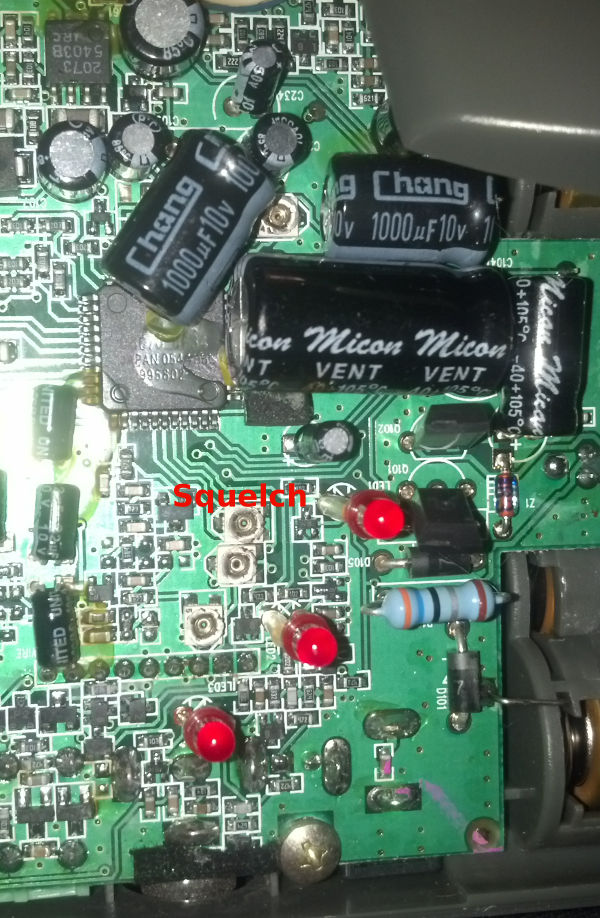
intercom adjustments
Squelch adjustment tradeoffs
For this intercom, the squelch potentiometer makes the squelch “tighter” with counterclockwise turning and “looser” with clockwise turning. On this intercom, when the squelch is open (but with no/incorrect CTCSS) the middle RX LED will flicker once per second. When the squelch is set just tight enough to stop the RX LED from flashing with no incoming RF signal, the RF RX sensitivity is maximum (maximum range).
If the squelch threshold is set too low, there can be occasional bursts of static (CTCSS false decode). Also, for battery operated intercoms, the battery consumption will be higher if the squelch is always open as it’s trying to find the CTCSS tone constantly, putting the receiver into full power drain.